FLINTA*: Female, Lesbian, Intersex, Non-Binary, Trans, and Agender
FLINTA*, as an acronym, originated in German feminist and lesbian spaces as a way to create safe environments for those affected by gender based marginalisation. Since then, it has evolved to include a broader group experiencing this type of marginalisation.
Lately, you might have seen it being used more and more often at festivals or other cultural events. In such contexts, the term FLINTA* is used to clearly define which groups are welcome to join an event or venue. In doing so, it clearly excludes cisgender men, while grouping together the people suffering from discrimination under the patriarchy. The aim is to create safe spaces for marginalised individuals to participate in.
FLINTA*: Not Inclusive Enough?
Specifically in the context of concerts and festivals, the usage of the acronym has guaranteed inclusion in spaces that would otherwise not feel very welcoming or safe to everyone, such as moshpits. The importance of creating those spaces should not be underestimated.
However, as FLINTA* becomes more widespread in usage, questions are being raised about what the acronym makes possible in terms of inclusion, and which groups it might unintentionally exclude.
How Do We All Feel Comfortable in the Moshpit?
That is the question that lies at the heart of our panel discussion. The theme is shaped by the recent surge in FLINTA* music events. These initiatives encourage marginalised individuals to take up space by first creating that safe environment for them to express themselves freely. Despite the recent popularity, these practices are not necessarily new. They’re rooted in feminist music cultures that sought to make the male-dominated live music experience more welcoming for women and other marginalised groups.
FLINTA* has become a continuation of this practice by raising awareness about inclusion and safety in contemporary cultural spaces. One thing remains unclear: what does inclusion mean in practice? Who gets to feel included?
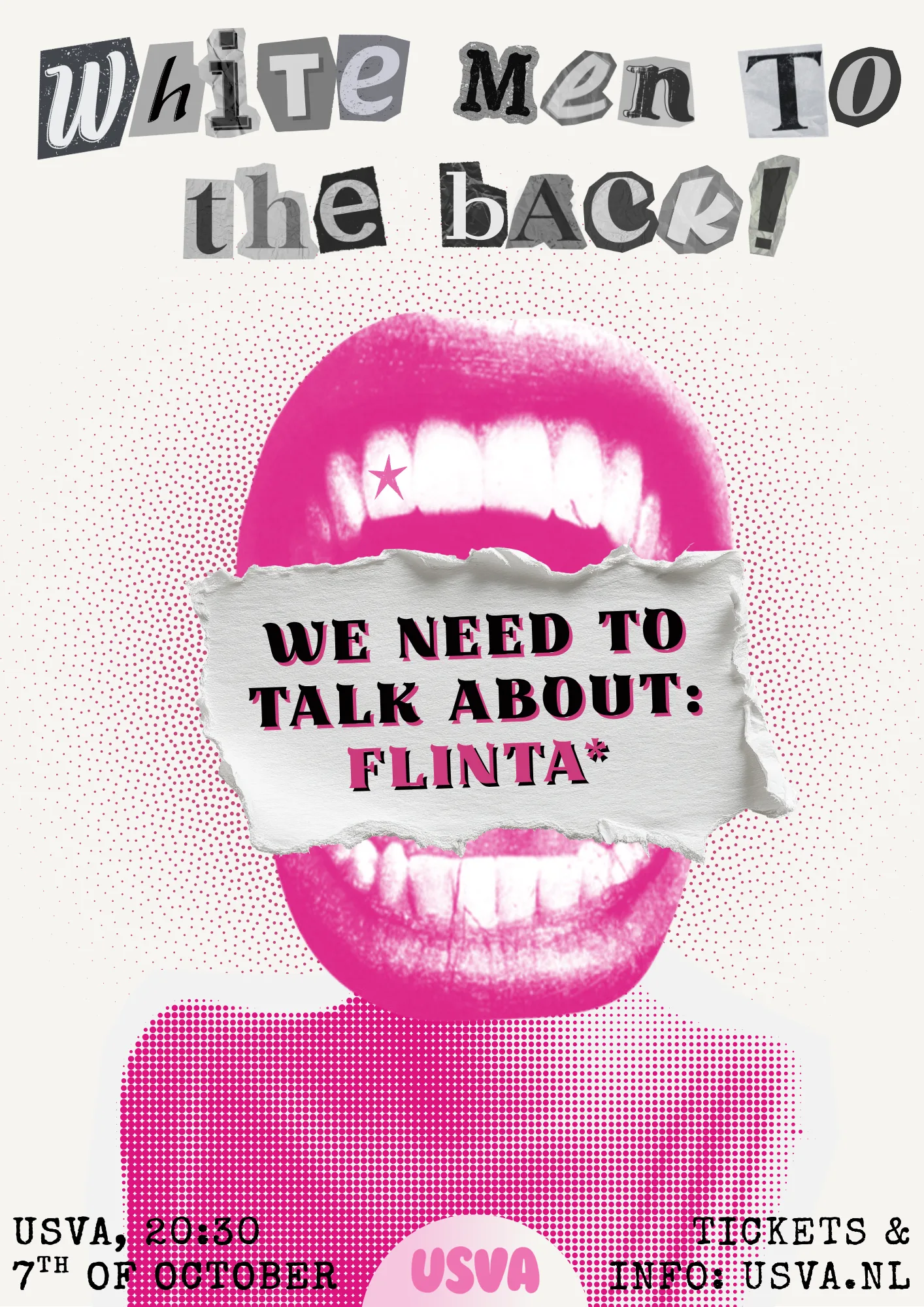
Join us as we discuss these questions during the We Need to Talk About: FLINTA* event. Together with our speakers, we’ll explore the history and importance of the acronym, its place in contemporary cultural spaces, the role it plays in creating inclusive, safe spaces, and also the questions and debates that emerge when we try to define who those spaces are for.
Practical Information
There will be time for a Q&A with our speakers, so you get the chance to ask any questions you might have, or share your thoughts, feelings and experiences! We will be joined in our discussion by:
Stacey Copeland: Assistant Professor of the Centre for Media and Journalism Studies who will give us an historical insight into lesbian feminism, particularly regarding queer and feminist media production and aesthetics.
Elle Zwinkels: PhD-candidate in cultural sociology and media studies. She is starting her research on the role of digital mobile media in how contemporary trans and/or queer individuals experience the music events they attend.
Groningen Feminist Network: a revolutionary, intersectional feminist organization, who regularly host events for an intersectional crowd.
🗓️ Date: Wednesday, 7th of October
🕝 Time: 20:30
📍 Location: Usva Theatre, Munnekeholm 10
🎟️Tickets: €5 students, €8 others